Type Spin: alphabet run game
KAYAC Inc.Racing
4.5921.00 Reviews
- Version
- 2.5.8
- Installs
- 50.00M
- Age Rating
- Teen
Screenshots
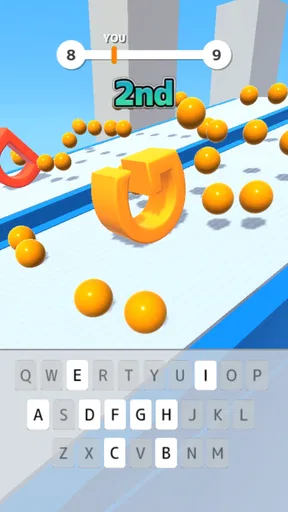
Our Review of Type Spin: alphabet run game
 Analysis by Appyee
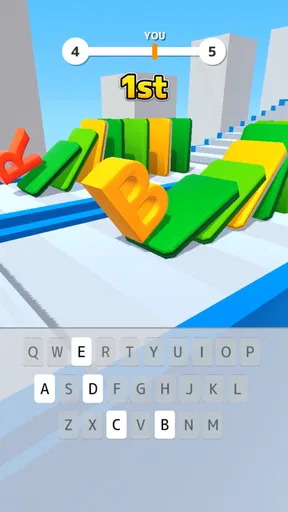
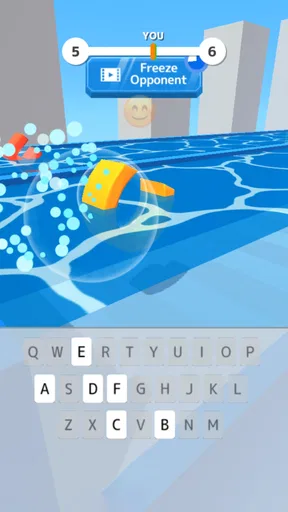
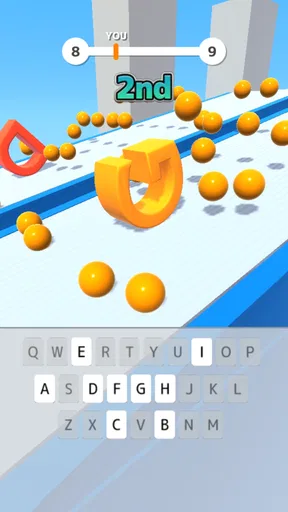
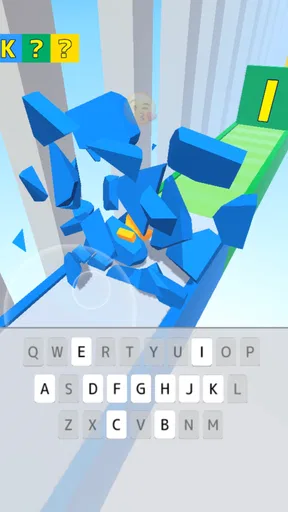
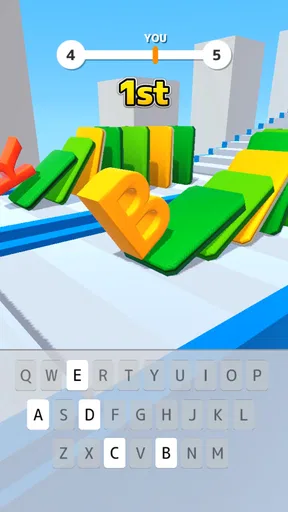
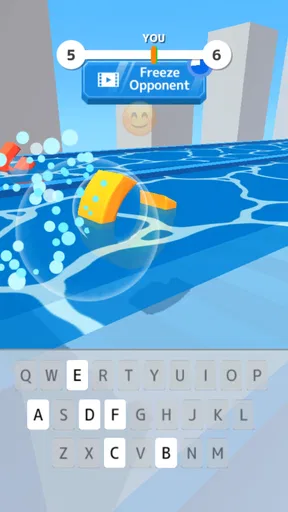
I went into Type Spin expecting a small racing game built around letters, and that is exactly where its appeal starts. You rotate alphabet characters, shape them into a moving form, and try to reach the finish while the physics decide whether your idea works or falls apart. It is a compact concept, but not a mindless one: every level asks me to read the terrain, choose a useful letter, and accept that a clever-looking shape may behave badly once it starts rolling.
That makes this a different kind of racing game from the usual lane-based or car-focused options. There is no familiar vehicle to tune and no conventional track to memorize. The thing I control is the letter itself, so the challenge sits somewhere between a physics puzzle and a short race. I recommend it most to people who enjoy experimenting with shapes and learning through quick failures. If you want realistic driving, deep vehicle progression, or long competitive sessions, this is probably not the right category for you.
How to decide if this unusual racing game suits you
The first question is not whether you like racing games in general. It is whether you enjoy racing where the main skill is understanding movement rather than steering a car. Type Spin comes from KAYAC Inc. and is free to play, which makes it easy to try without treating the download as a major commitment. The game is aimed at a Teen audience, so I would not present it as a preschool-style alphabet toy despite its letter-based presentation.
I also look at how much attention a game demands in ordinary life. This one fits the kind of session I might start while waiting for an appointment or taking a short break. The central action is immediately understandable, but success depends on observing what happens after a spin, a bounce, or a bad landing. That combination gives it more staying power than a one-joke novelty, while keeping the entry barrier lower than a full simulation racer.
Its public reception suggests that the format has reached a broad audience: it holds a 4.5 average from around 119 thousand ratings and has passed 50 million installs. I would treat those figures as evidence that the idea is accessible, not as a guarantee that every player will enjoy it. Physics games divide people quickly. Some players love the surprise of an imperfect landing; others find the same unpredictability irritating.
The current version is 2.5.8 and it runs on Android 6.0 or later. That matters if you are using an older device, although compatibility alone does not tell me how smoothly every phone will feel. My practical advice is to judge it by the first few attempts: if the movement feels amusingly unpredictable rather than unfair, you are probably in its target audience.
The real decision is physics tolerance
In a conventional racing game, I usually expect a clear relationship between input and result. Turn left and the vehicle turns left; brake before a corner and the car slows. Here, the letter’s outline changes the way it interacts with the course. A broad shape may catch an edge, while a narrow one may pass through a space more cleanly but lose stability. That means I cannot rely on reflexes alone.
This is the first non-obvious trade-off: a visually simple letter can be strategically better than a visually impressive one. I learned to stop choosing shapes based only on how quickly they seemed to move. Instead, I watched whether they kept contact with the ground and whether their corners created useful leverage on slopes. Thinking in terms of balance makes the game feel much more deliberate.
The second trade-off is that failure can teach me something, but only if I pay attention. Repeating the same input without changing the selected shape rarely helps. When a run goes wrong, I try to identify the cause: did the form tip too early, catch a platform, or approach an incline at the wrong angle? That small habit turns retries into experiments rather than empty repetition.
Why the letter mechanic feels better than a standard gimmick
The alphabet theme is not merely decoration placed on top of an ordinary racer. The letter is the object I am asking to move through the course, so its geometry becomes part of the decision. I am effectively choosing a temporary vehicle by choosing a character. That gives the game a puzzle-like layer without requiring a separate planning screen or a complicated rulebook.
I especially like the way this changes my sense of control. I am not just asking, “Can I go faster?” I am asking, “What shape will survive this section?” That question makes familiar racing goals feel fresh. A run can be won by a better choice before the movement even begins, which is a satisfying contrast with games that reward constant tapping.
There is also a useful distinction between understanding a letter and mastering it. At first, I might notice that one shape rolls well. Later, I begin to recognize situations where that same shape becomes awkward. This is where the game can occupy a comfortable middle ground: simple enough for a quick introduction, but capable of rewarding players who study the relationship between form and terrain.
How I play it during a normal short break
My most realistic use case is a ten-minute break when I want something interactive but do not want to follow a story or remember a large set of controls. I start with a few attempts, make a mental note of which letters behave poorly on the current section, and then try a different approach. If I have only a minute, I can still enjoy the immediate movement. If I have longer, I can focus on refining the choice rather than simply rushing forward.
A useful workflow is to separate observation from reaction. On the first attempt, I watch the course and the shape. On the next, I make one meaningful change instead of changing everything at once. For example, I might keep the same general approach but select a different letter, or keep the letter and alter my timing. This makes the result easier to interpret and prevents the game from becoming a blur of random retries.
That method is more valuable than it sounds because physics-based games can tempt me into frantic input. Type Spin is at its best when I slow down enough to notice why a shape is failing. Players who prefer calm, analytical tinkering may find that surprisingly satisfying. Players who want constant acceleration and instant recovery may experience the same design as sluggish or inconsistent.
Where it wins against ordinary racing games
Type Spin wins on originality and low commitment. A traditional racing game usually asks me to learn a vehicle, a track layout, or a larger control system. This game gives me a single memorable idea: spin letters toward the goal and understand how their forms behave. That makes it easier to explain to a friend and easier to sample without studying a tutorial-heavy system.
It also wins when I want a racing experience that feels like a puzzle. Many arcade racers emphasize speed, reactions, and competition. Here, the shape itself becomes part of the solution. That difference gives the game a distinct identity rather than making it feel like a reduced version of a car racer.
The compact premise is another strength. I can approach it casually, but the physics create enough variation in my attempts to keep the mechanic from being exhausted immediately. The best moments come when a letter that looked unsuitable turns out to handle a section well because I approached it from the right angle.
For families or friends comparing games to try together, the visual idea is also easy to understand. Someone can watch a run and immediately see the problem: the letter is rolling, tipping, or struggling over the course. That makes it more watchable than a game whose appeal depends entirely on menus, upgrades, or hidden statistics.
Where a different racing game may be the better choice
I would choose a conventional arcade racer instead if my priority were speed, competition, and a strong sense of vehicle control. Type Spin does not replace the satisfaction of taking a clean corner in a car or learning a track through repeated laps. Its movement is intentionally governed by shape and physics, so it can feel less predictable than a game built around precise steering.
I would also look elsewhere if I wanted long-term progression to be the main reason to return. The attraction here is the interaction between letters and terrain. Someone who needs extensive customization, a garage, realistic handling, or a large competitive structure may find the concept too focused. That is not a flaw in the idea; it is a sign that the game is designed around a narrower pleasure.
Players who dislike trial and error should think carefully before installing it. A failed attempt may feel deserved once I understand the cause, but it can still be frustrating when a shape behaves differently from what I expected. The game asks for patience with physical motion. If I want every input to produce a crisp, predictable response, a standard top-down racer or lane racer would likely suit me better.
There is a similar issue for people looking for an educational alphabet app. The letters are central to the mechanics, but this is still a racing game, not a structured reading or spelling tool. I would not choose it to teach letter recognition. I would choose it for the playful challenge of making familiar forms move.
What switching to this game really costs
Because it is free, the financial barrier is low. The bigger cost is attention: I need to accept a different definition of control. Someone moving from a car racer may initially spend time unlearning the expectation that steering alone should solve every problem. Someone moving from a pure puzzle game may need to become comfortable with motion that continues to develop after the initial decision.
The learning cost is manageable because the central rule is easy to grasp. The deeper cost appears when I try to improve. I cannot simply memorize one universal tactic, since the useful shape depends on the situation. That means progress comes from observation and adjustment, not from finding one button combination and repeating it forever.
My best advice before deciding whether to keep it is to give the physics a fair test rather than judging the first awkward run. Try a few different letters and pay attention to how the outline affects contact with the course. If that process feels like discovery, the game has probably earned space on your phone. If it feels like wrestling with controls, switching to a more direct racer will save time.
The Teen content rating is another reason to consider the intended audience before recommending it to a younger child. The rating does not change the basic appeal of the mechanic, but it means I would not assume that the game is automatically suitable for every age simply because it uses alphabet shapes. For older players, the rating is unlikely to be the deciding factor; for families, it is worth checking before handing over the device.
Small habits that make the physics easier to read
I found three habits particularly useful. First, I avoid changing several variables at once. If I choose a new letter, I try to keep my timing similar so I can see what the shape changed. Second, I watch the first contact with a slope or obstacle, because that moment often explains the rest of the run. Third, I treat a slow approach as a test rather than a failure; learning how a letter settles can be more valuable than reaching the goal quickly.
Another practical tip is to think about the letter as a rolling object, not as a symbol. The familiar appearance can encourage me to judge it visually, but the useful question is how its edges and open spaces interact with the ground. That shift in perspective is subtle and makes the game more interesting. It is also why simply selecting the most recognizable or symmetrical character may not always be the smartest choice.
I would not chase perfect-looking runs from the beginning. The game becomes more enjoyable when I use early attempts to map behavior, then apply that knowledge. This is a better fit for patient players than for anyone who expects immediate mastery. It also gives short sessions a purpose: even a failed attempt can reveal something that improves the next one.
My recommendation for different kinds of players
For casual players, I recommend it as a clever change of pace. It is free, quick to understand, and unusual enough to stand apart from the crowded racing category. You do not need to be a racing specialist to appreciate the basic idea, and the alphabet-based physics give you a reason to keep experimenting after the novelty wears off.
For puzzle fans, I recommend it even more strongly, provided you enjoy movement and imperfect outcomes. The most rewarding decisions happen before and during a run, when you connect a shape’s geometry with the course. It is not a traditional logic puzzle, but it offers the same satisfaction of finding a better approach after noticing a hidden relationship.
For serious racing fans, my recommendation is conditional. Install it if you are curious about an experimental physics challenge, not if you expect it to replace your favorite car game. Its strengths are creativity and accessibility, while its limitations are the absence of the precise, competitive driving feel that defines more conventional racers.
For younger children, I would follow the Teen content rating rather than assuming the simple visual theme makes it a children’s title. For anyone seeking a learning tool, a realistic simulator, or a deep vehicle-management game, I would skip it and choose an app built around those specific goals.
After spending time with it, I see Type Spin as a focused experiment that succeeds because its central idea affects the actual way the game is played. KAYAC Inc. has built a racing experience where the alphabet is not just a theme; it is the source of the movement problem. That gives the game a personality many ordinary racers lack.
My clear recommendation is to try it if you want a free, inventive physics racer for short sessions and enjoy learning through experimentation. I would keep expectations realistic: the controls may feel unpredictable, retries are part of the experience, and it will not satisfy players searching for realistic cars or deep progression. But if the thought of choosing a letter based on how it rolls sounds more interesting than choosing another vehicle, this is an easy game to give a fair chance.
Verdict
Strengths of Type Spin: alphabet run game
- Simple swipe controls make it easy to start playing immediately.
- Short races are ideal for quick breaks or casual sessions.
- Colorful visuals and playful animations make the game appealing.
- Increasing challenges help keep the gameplay engaging over time.
- The alphabet theme offers a light educational element for younger players.
Limitations of Type Spin: alphabet run game
- Gameplay can become repetitive after several races.
- Ads may interrupt the experience between levels or attempts.
- Later stages may feel more frustrating than skill-based.
- The educational value is limited beyond recognizing letter order.
- Progression may feel shallow for players seeking deeper mechanics.
Other Releases by KAYAC Inc.
View All
Ball Run 2048: merge number
Casual4.1

Number Master: Run and merge
Action4.4

Draw Action: Freestyle Fight
Action4.3

Ragdoll Break: Let's destroy!
Action4.3
Similar Picks in This Category
View All
Hill Climb Racing
Fingersoft4.3

Dr. Driving
SUD Inc.4.2

Traffic Rider
skgames4.5

Asphalt 8 - Car Racing Game
Gameloft SE4.6

Race Master 3D: Car Racing
Beresnev Games4.6

Extreme Car Driving Simulator
AxesInMotion Racing4.3
Frequently Asked Questions
What is Type Spin: alphabet run game?
Type Spin: alphabet run game is a casual arcade title built around letters, movement, and quick reactions. You guide a spinning alphabet character through obstacle-filled stages while trying to reach the finish line and collect useful rewards. Its simple controls make it easy to start, but later levels can require better timing and more careful movement.
How do you play Type Spin: alphabet run game?
The game is designed for short, straightforward sessions. You generally control the letter character by swiping or tapping, depending on the device and current game version, to change its direction and avoid hazards. The main objective is to move through each course successfully, handle obstacles, and complete the level without losing your progress.
Is Type Spin: alphabet run game free to download?
Type Spin: alphabet run game can typically be downloaded and played for free, although the available version may include advertisements or optional in-app purchases. These purchases may offer bonuses, cosmetic items, or other conveniences. Before downloading, check the listing for your Android or iOS device because pricing, ads, and purchase options can change.
Does Type Spin: alphabet run game require an internet connection?
The core gameplay appears suitable for quick offline play, which is convenient when you are traveling or do not have reliable mobile data. However, an internet connection may still be needed for advertisements, updates, leaderboard features, analytics, or in-app purchases. Availability of offline functions can vary by version, so verify the current store description.
Is Type Spin: alphabet run game suitable for children?
Type Spin: alphabet run game uses colorful visuals, simple mechanics, and letter-based gameplay that may appeal to children and casual players. Nevertheless, parents should review the age rating and privacy information before installation, especially if the game displays advertisements or offers in-app purchases. It is also worth checking whether the current version contains features requiring an online connection.
Play our best games!


